






























SCOPE KOREA 2026
29 JUL – 2 AUG 2026
GEN 03 · AUGUST 2026
THAILAND × SOUTH KOREA
Presentation Archive
SCOPE KOREA Student Innovation Showcase
Past Presenters & Academic Projects
GEN 03 · AUGUST 2026 THAILAND × SOUTH KOREA
การประชุมวิชาการนักเรียนว่าด้วยการนำเสนอผลงาน นวัตกรรม และการประเมินผล (ไทย-เกาหลีใต้) ปี 2025 - 2026
발표, 혁신 및 평가에 관한 학생 학술대회 (스코프 코리아 2025 - 2026)
รวบรวมผลงานของนักเรียนที่ได้รับคัดเลือกให้นำเสนอผลงานทางวิชาการและนวัตกรรมในโครงการ SCOPE KOREA


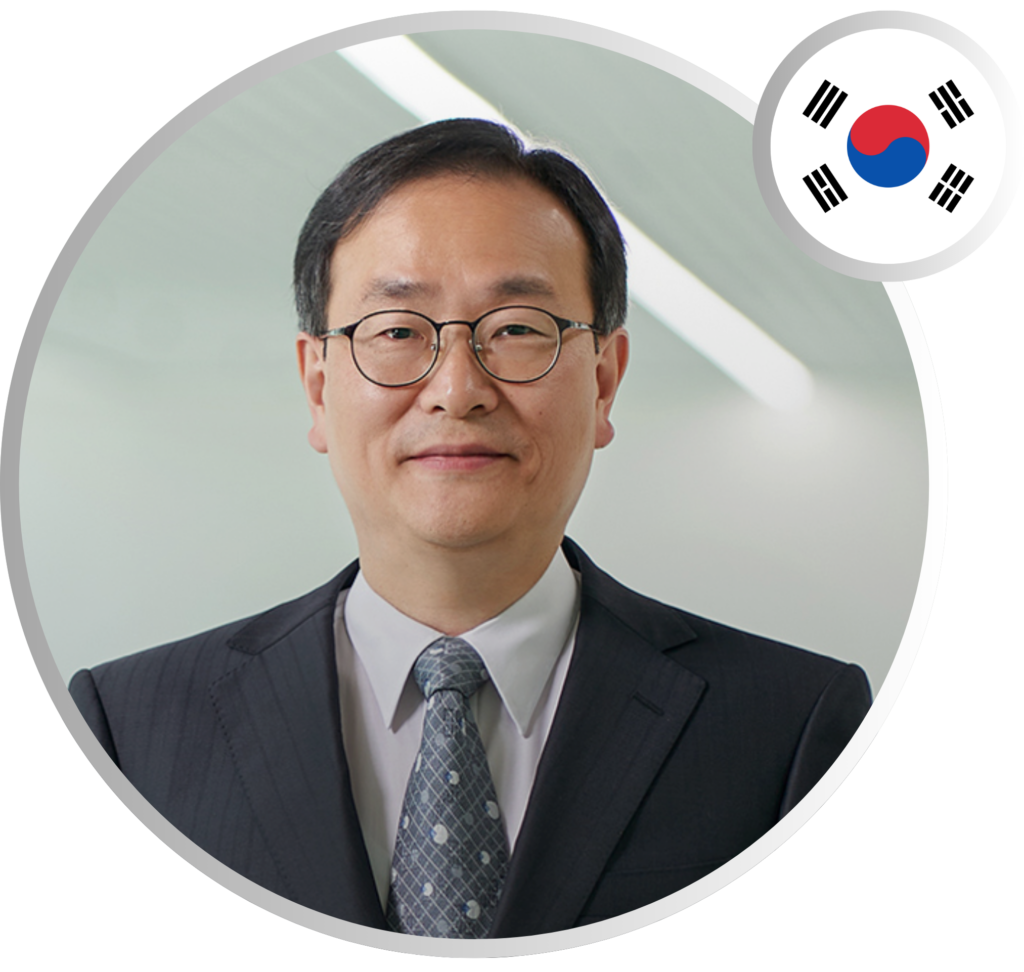
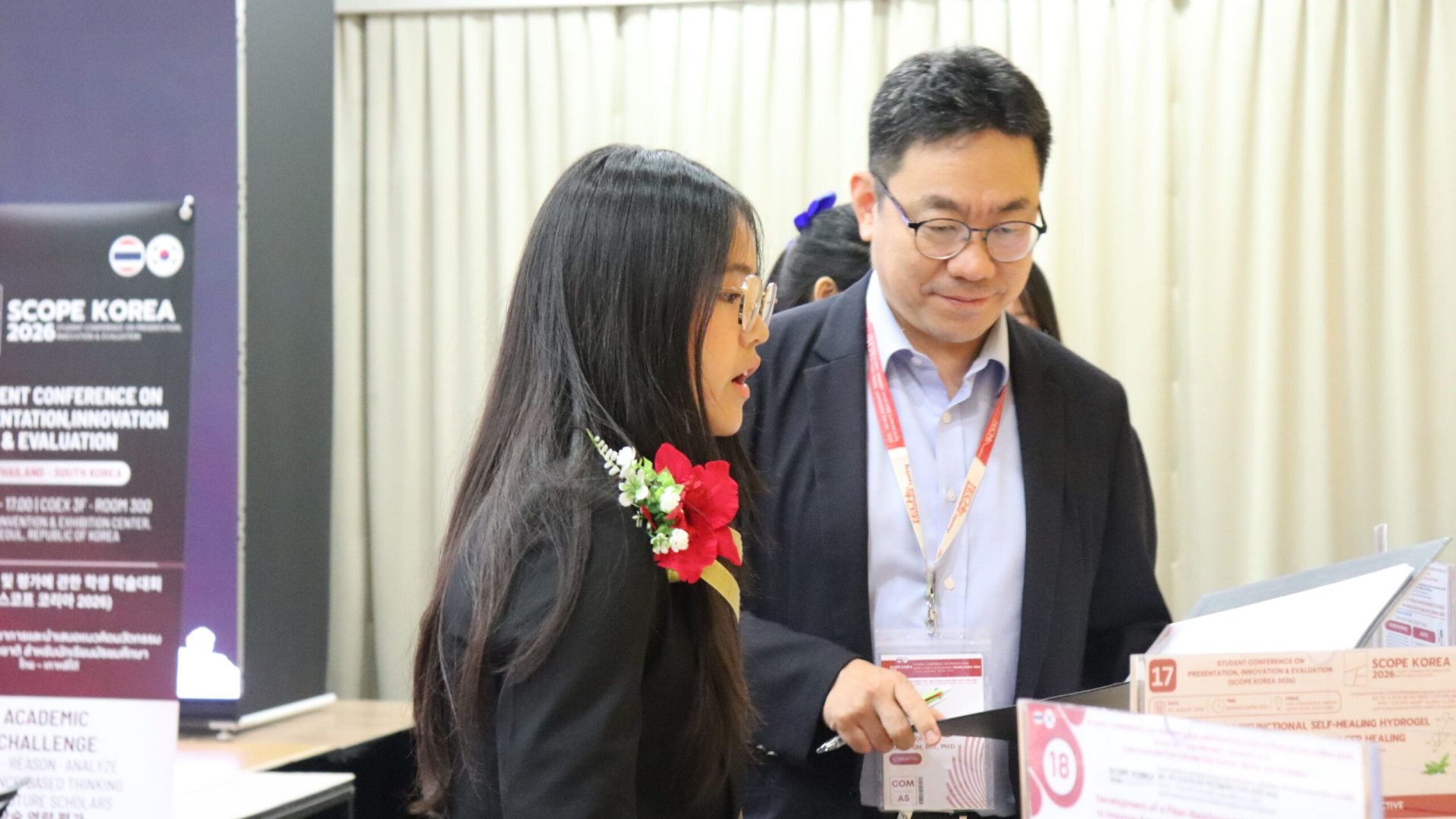
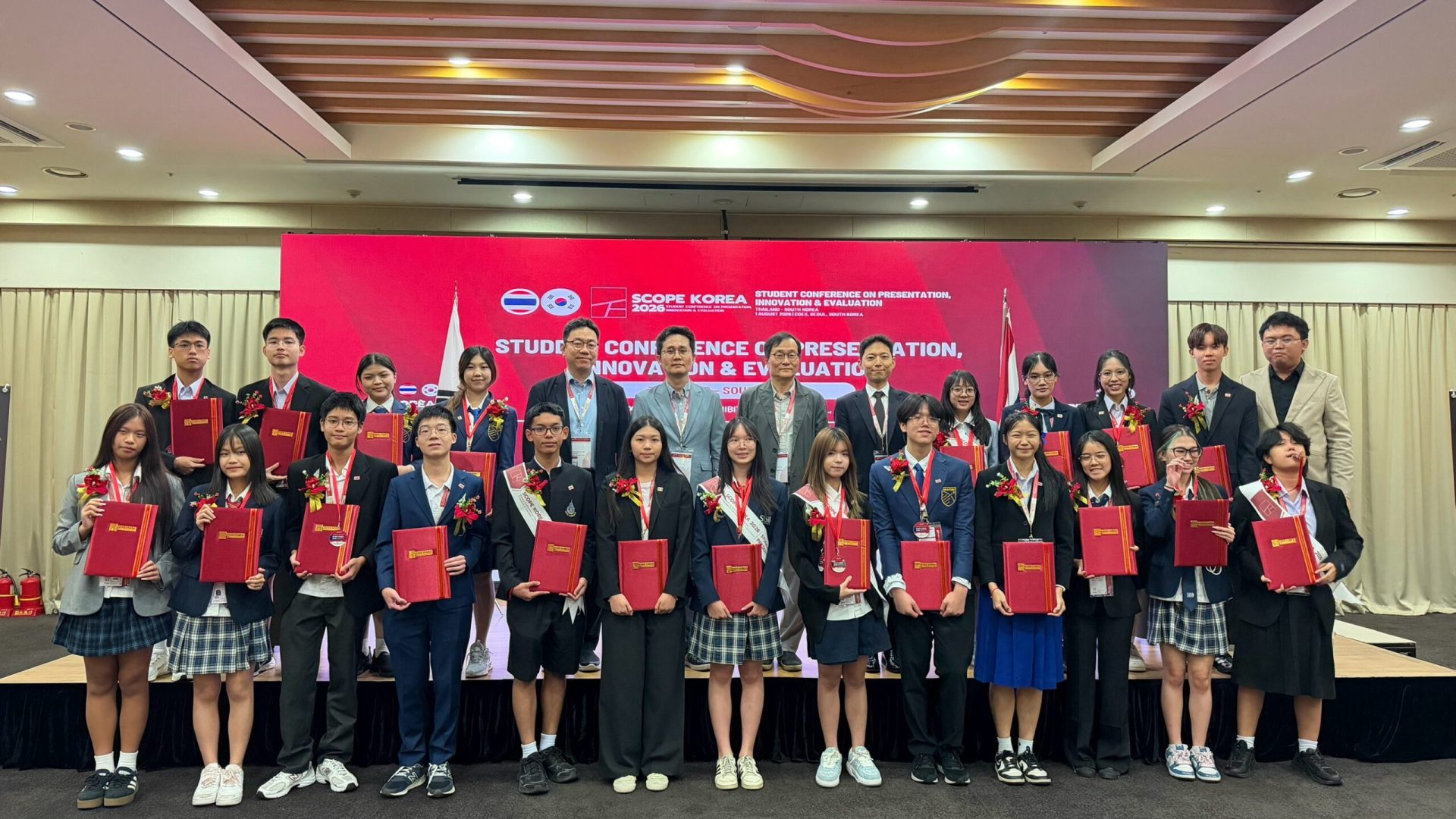
กรรมการผู้ทรงคุณวุฒิและคณาจารย์มหาวิทยาลัยชั้นนำ
ศาสตราจารย์ ดร. ควอน-ยูล รยู
อดีตรองคณบดีคณะวิทยาศาสตร์ชีวภาพ และอดีตหัวหน้าภาควิชาวิทยาศาสตร์ชีวภาพ มหาวิทยาลัยโซล (University of Seoul, South Korea)
ผู้เชี่ยวชาญด้านชีวเคมี (Biochemistry) และวิทยาศาสตร์ประสาท (Neuroscience) มีผลงานวิจัยตีพิมพ์มากกว่า 20 ปี
ในวารสารชั้นนำระดับโลก
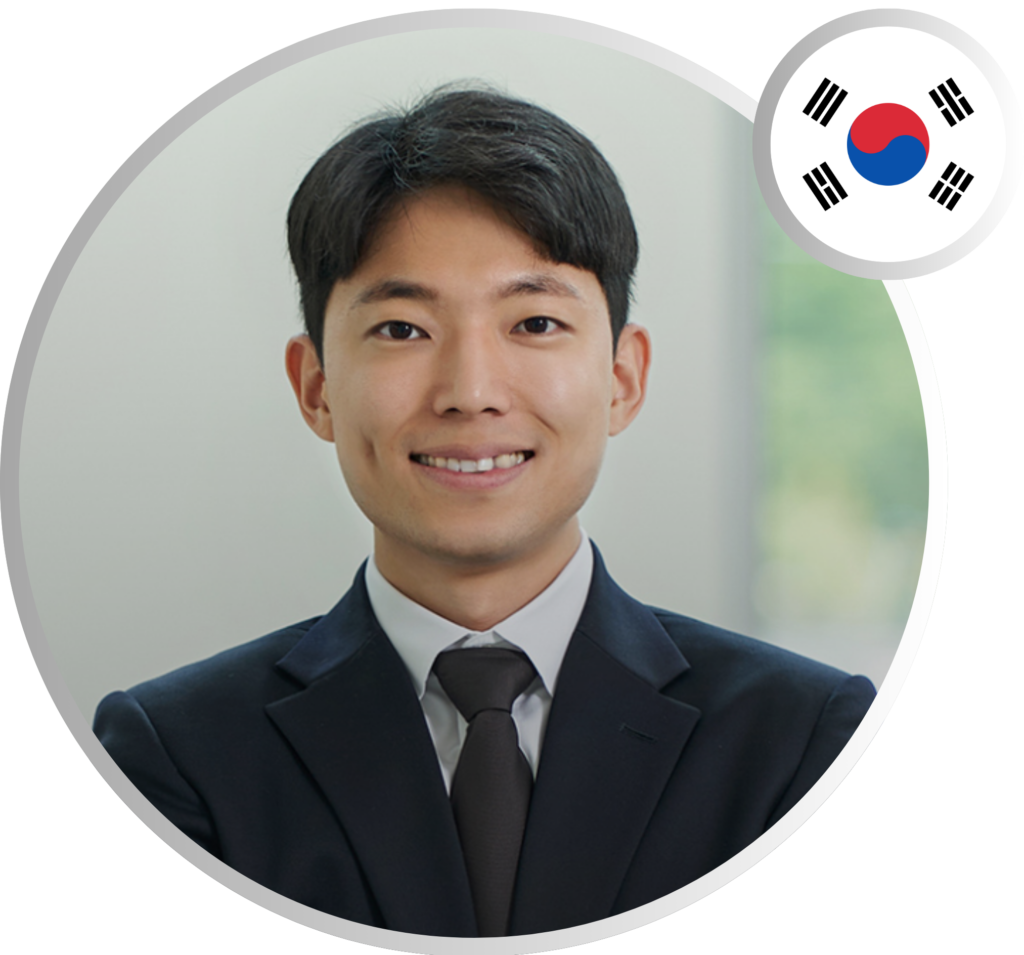
ศาสตราจารย์ นพ. ดร. บอมโจ โอ
ภาควิชาเวชศาสตร์ มหาวิทยาลัยแห่งชาติโซล
(Seoul National University, สาธารณรัฐเกาหลี)
ผู้ทรงคุณวุฒิและอาจารย์แพทย์ โรงพยาบาล SMG-SNU Boramae Medical Center สาธารณรัฐเกาหลี มีผลงานวิจัยตีพิมพ์มากมาย
ในวารสารชั้นนำระดับโลก
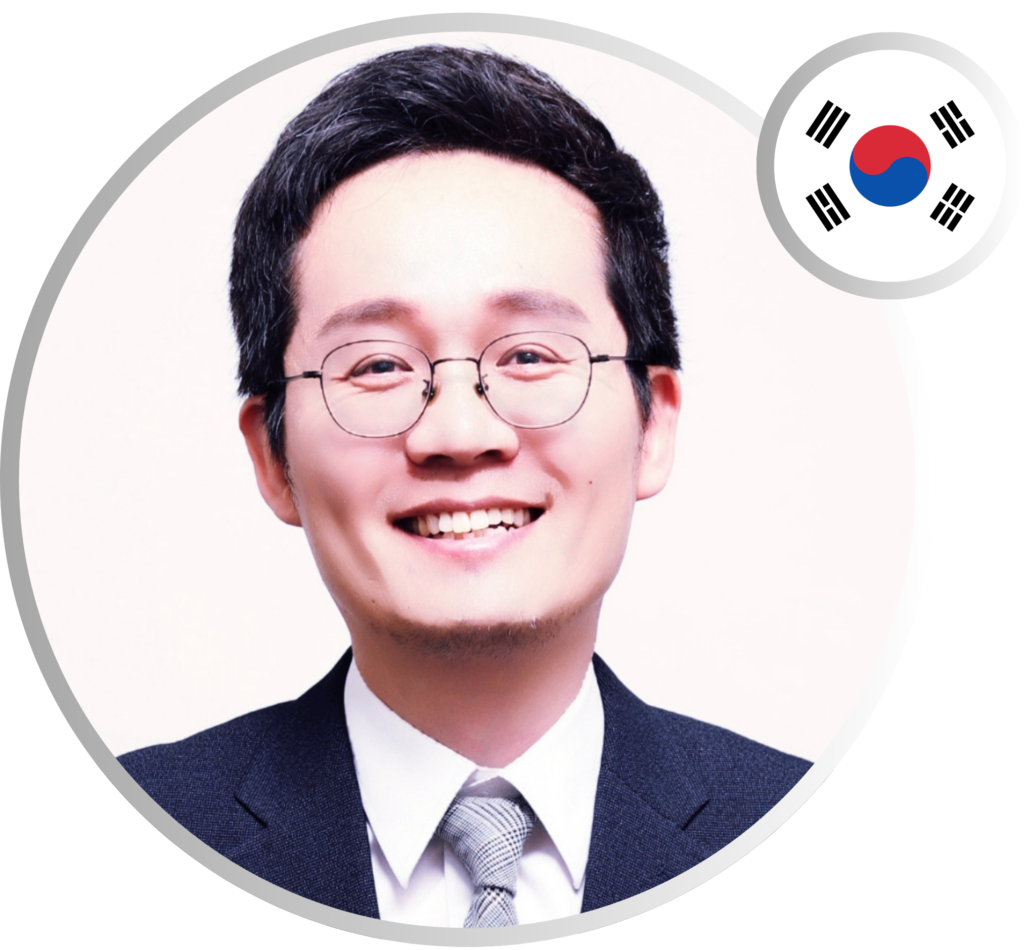
ผู้ช่วยศาสตราจารย์ ดร. ฮงอิก ฮวาง
ภาควิชาวิทยาศาสตร์ชีวภาพ มหาวิทยาลัยโซล (University of Seoul, South Korea)
ผู้เชี่ยวชาญวิศวกรรมศาสตร์และด้านประสาทวิทยาศาสตร์ (Neuroscience)
การทำงานของสมอง ระบบการเรียนรู้ ความจำ และความผิดปกติทางจิตเวช จบปริญญาเอกจาก
Massachusetts Institute of Technology (MIT, USA) มีผลงานวิจัยตีพิมพ์มากมายในวารสารชั้นนำระดับโลก
รองศาสตราจารย์ ดร. จงชาน คิม
ภาควิชาวิทยาศาสตร์ชีวภาพ มหาวิทยาลัยโซกัง (Sogang University, South Korea)
ผู้เชี่ยวชาญด้านมะเร็งวิทยา (Cancer Biology) มะเร็งต่อมลูกหมาก กลไกการเกิดเนื้องอก และงานวิจัย non-coding RNA มีผลงานวิจัยร่วมกับศูนย์มะเร็งชั้นนำของโลก อาทิ MD Anderson Cancer Center (USA) สถาบันมะเร็งอันดับ 2 ของโลก
SCOPE KOREA 2026 29 JUL – 2 AUG 2026
GEN 03 · AUGUST 2026
THAILAND × SOUTH KOREA
Presentation Archive
Discover student innovations, academic ideas, and presentations from previous generations of SCOPE KOREA. สำรวจผลงาน แนวคิด และการนำเสนอทางวิชาการของนักเรียนไทยจาก SCOPE KOREA รุ่นที่ผ่านมา


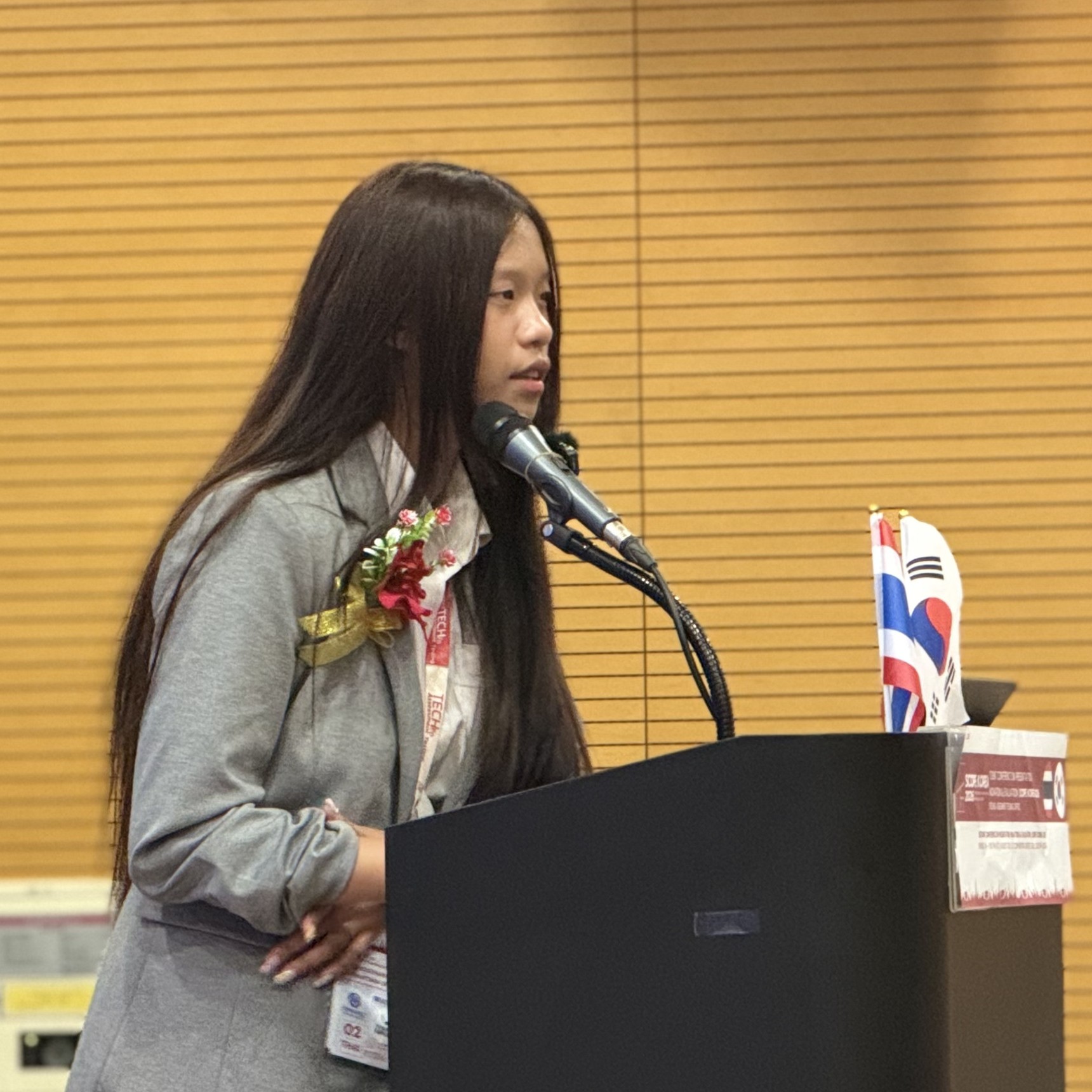
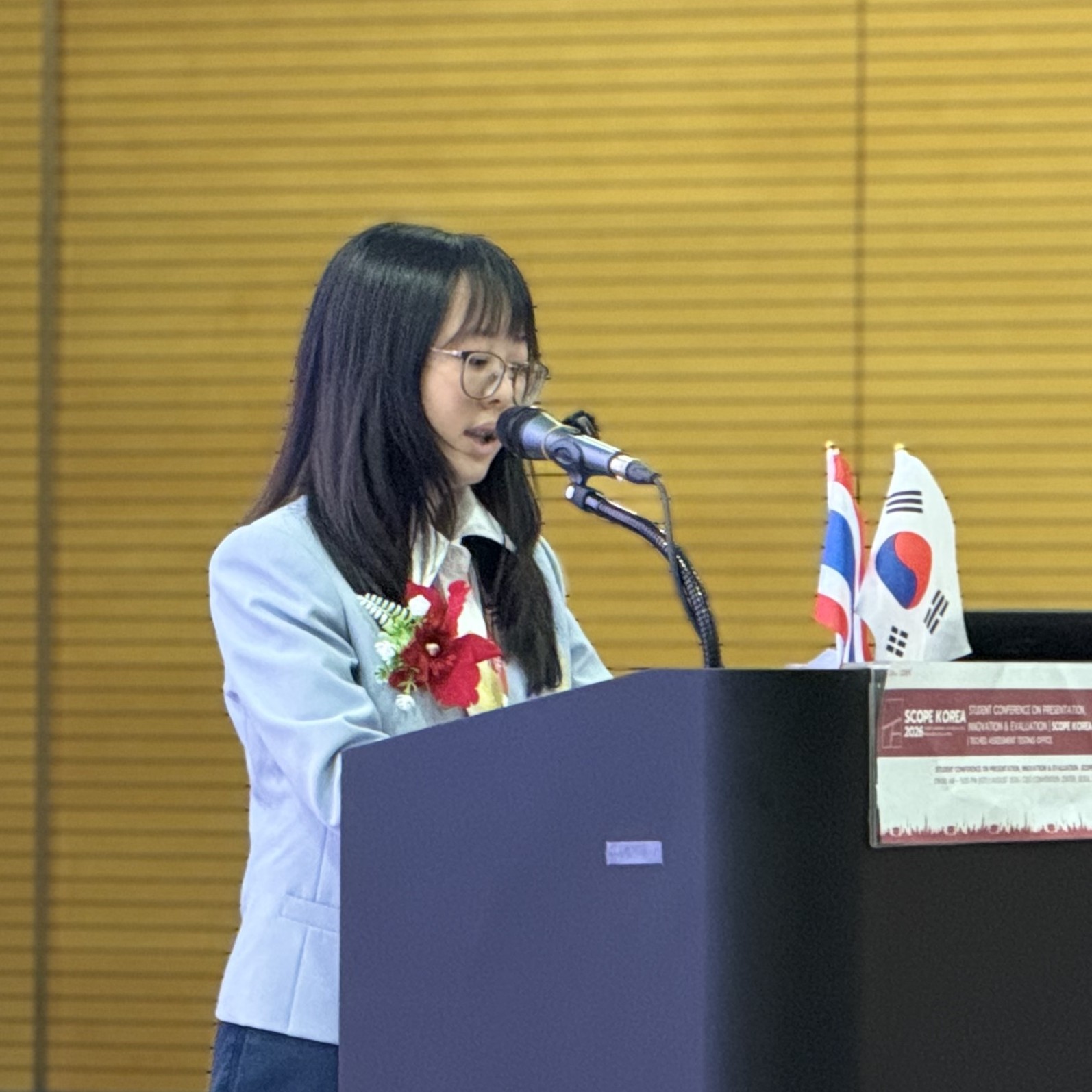
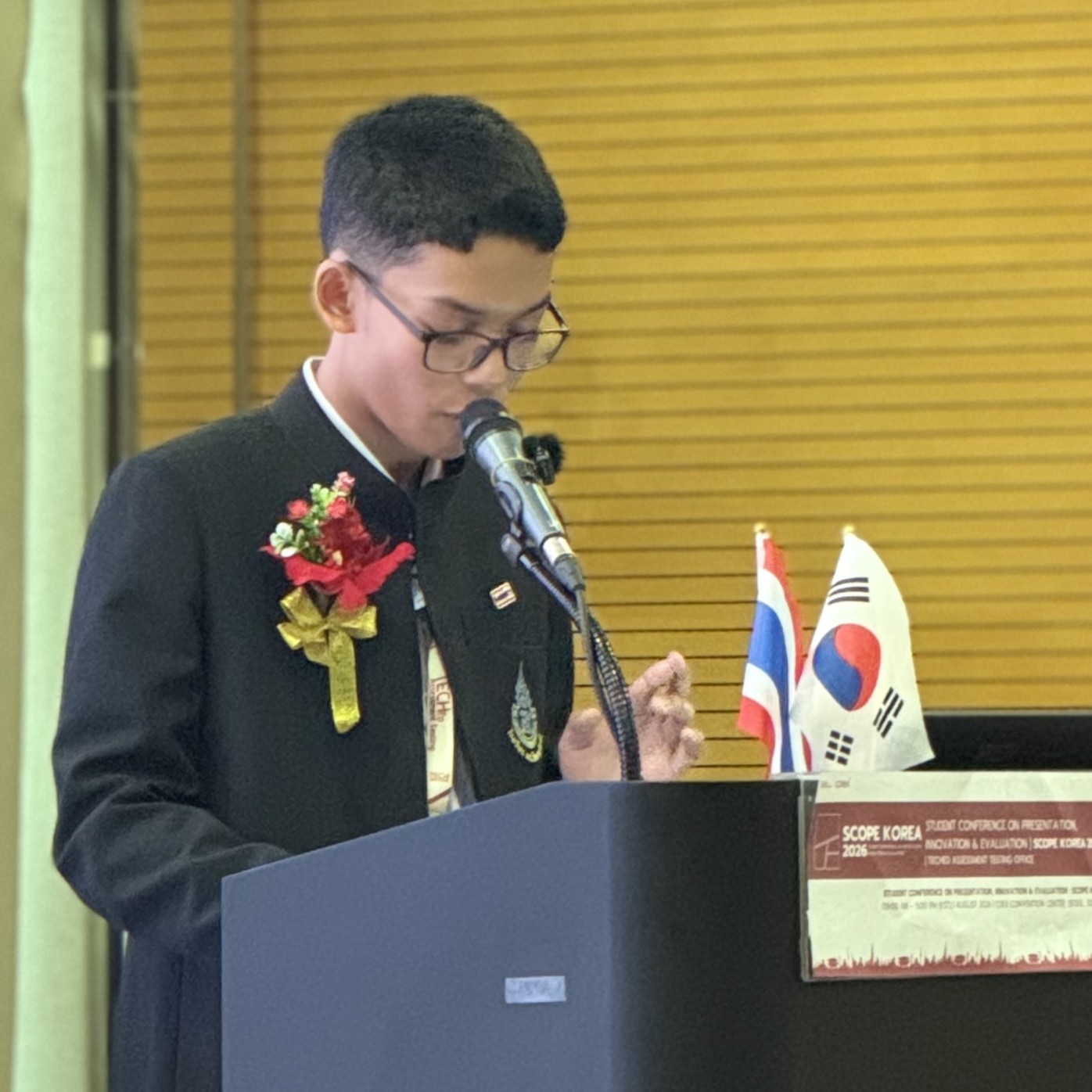
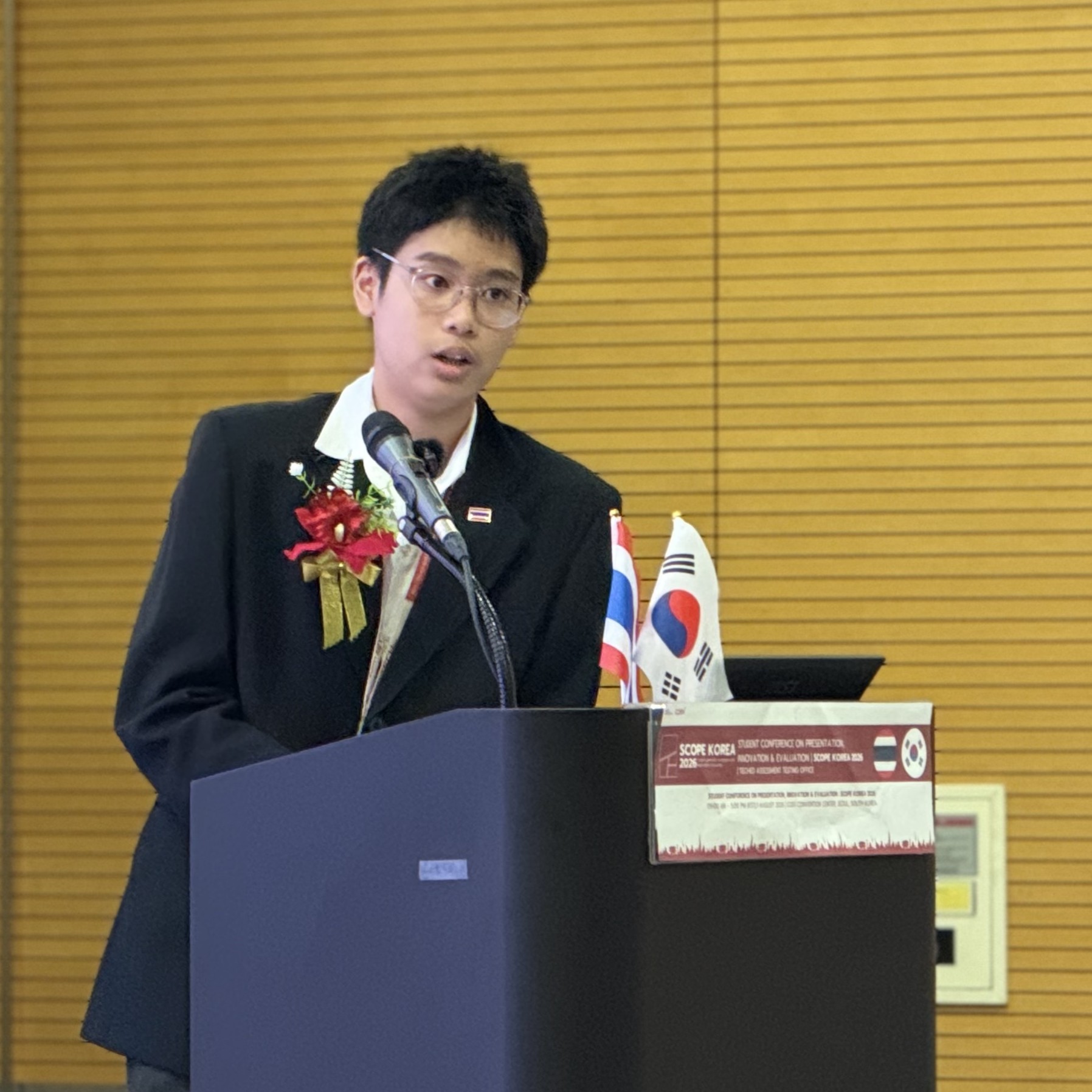
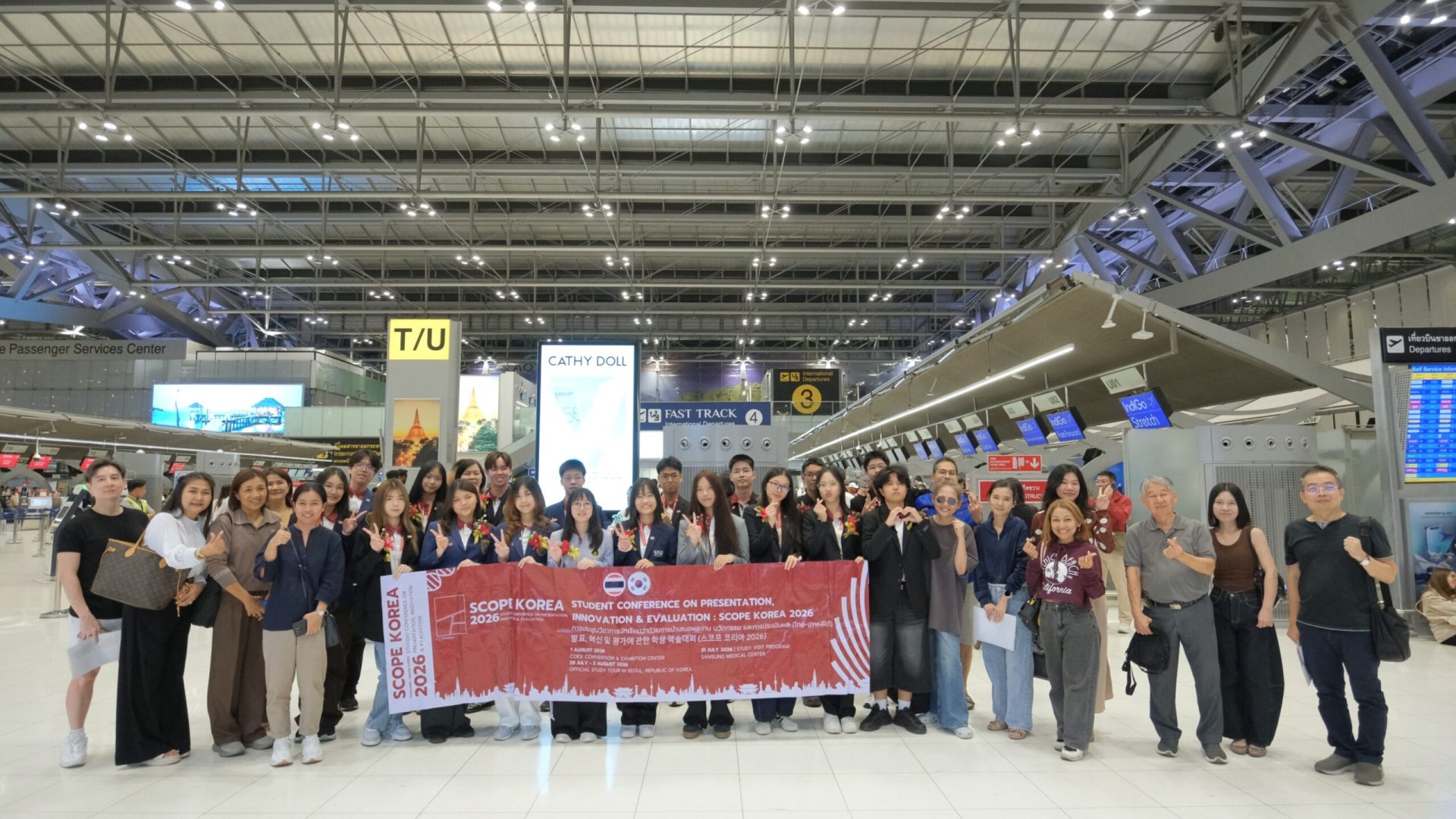
ณ ศูนย์ประชุมและการจัดนิทรรศการโคเอ็กซ์ กรุงโซล สาธารณรัฐเกาหลี เมื่อวันเสาร์ที่ 1 สิงหาคม 2569
Stroke Rehabilitation Enhancement With AI
- Stroke is one of the leading causes of death and long-term disability worldwide.
- Early rehabilitation within the first 3–6 months greatly improves recovery.
- Many rehabilitation devices are expensive, hospital-based, and inaccessible.
- There is a global shortage of neurologists and rehabilitation therapists.
- AI, surface EMG, and digital rehabilitation can make rehabilitation more affordable and accessible.
- Develop a functioning Arduino-based EMG system to record and process muscle signals.
- Establish baseline reference values for normal versus abnormal muscle activity, using both ADC values and medically validated thresholds.
- Integrate a medical knowledge base into the application to compare real-time EMG data against clinical standards.
- Design a rehabilitation feedback system that recommends specific physical therapy exercises depending on the severity of muscle weakness or abnormalities.
- Incorporate a cognitive rehabilitation module, including simple games, with statistical analysis
- (z-scores) to guide progress tracking.
- Ensure usability and accessibility, with a clear user interface for patients, therapists, and caregivers.
RehabSwift integrates low-cost EMG technology, signal processing, 3D muscle visualization, and cognitive rehabilitation into a single, user-friendly platform for stroke recovery. By providing objective muscle assessment, personalized exercise recommendations, and continuous progress tracking, the system supports more effective home-based rehabilitation while assisting therapists in monitoring patient recovery. This affordable and accessible solution has the potential to improve rehabilitation outcomes, reduce healthcare costs, expand access to rehabilitation services in resource-limited areas, and ultimately enhance the quality of life of stroke survivors.
Fall Risk Screening Using the SuraSole Smart Insole Among Older Adults
- Stroke is one of the leading causes of death and long-term disability worldwide.
- Early rehabilitation within the first 3–6 months greatly improves recovery.
- Many rehabilitation devices are expensive, hospital-based, and inaccessible.
- There is a global shortage of neurologists and rehabilitation therapists.
- AI, surface EMG, and digital rehabilitation can make rehabilitation more affordable and accessible.
- Develop a functioning Arduino-based EMG system to record and process muscle signals.
- Establish baseline reference values for normal versus abnormal muscle activity, using both ADC values and medically validated thresholds.
- Integrate a medical knowledge base into the application to compare real-time EMG data against clinical standards.
- Design a rehabilitation feedback system that recommends specific physical therapy exercises depending on the severity of muscle weakness or abnormalities.
- Incorporate a cognitive rehabilitation module, including simple games, with statistical analysis
- (z-scores) to guide progress tracking.
- Ensure usability and accessibility, with a clear user interface for patients, therapists, and caregivers.
RehabSwift integrates low-cost EMG technology, signal processing, 3D muscle visualization, and cognitive rehabilitation into a single, user-friendly platform for stroke recovery. By providing objective muscle assessment, personalized exercise recommendations, and continuous progress tracking, the system supports more effective home-based rehabilitation while assisting therapists in monitoring patient recovery. This affordable and accessible solution has the potential to improve rehabilitation outcomes, reduce healthcare costs, expand access to rehabilitation services in resource-limited areas, and ultimately enhance the quality of life of stroke survivors.
Development of a Platform to Mitigate Dental Anxiety in Adolescents
- Dental anxiety can cause fear and avoidance of dental treatment.
- Anxiety may reduce willingness to attend regular dental visits.
- An interactive digital platform was developed to help adolescents understand and prepare for dental procedures.
- The platform uses Tell–Show–Do techniques with visual and interactive content
- Reduce dental anxiety before dental treatment.
- Help adolescents understand dental procedures.
- Improve confidence and willingness to receive dental care.
- Provide an accessible platform for children and young adults
- An interactive platform can help adolescents better understand dental procedures.
- Visual explanations and simulations can reduce fear and uncertainty.
- The platform aims to improve confidence, treatment acceptance, and dental care participation
Development of Chitosan–Seashell Powder Composite Materials for Biomedical Cast Applications
- Chitosan is a biodegradable and environmentally friendly material with potential for biomedical applications.
- Conventional materials may have limitations in terms of sustainability and environmental impact.
- This project explores chitosan-based composite materials for biomedical cast applications
- Develop a composite material from chitosan and seashell powder for bio splint applications.
- Study the mixture ratio and mechanical properties of the composite.
- Evaluate the composite’s suitability as a sustainable biomedical material
- The developed chitosan–seashell composite has potential as a sustainable material for biomedical casts.
- It can help reduce production costs and utilize locally sourced, biodegradable materials.
- The project may support the development of more environmentally friendly and accessible biomedical products
NeuroGut Shield: AI-Powered Non-Invasive Gut-Brain Axis Platform for Preclinical Alzheimer’s Detection
- South Korea faces a growing burden of early-onset dementia, with cases projected to increase significantly.
- Current diagnostic methods are often time-consuming, invasive, and difficult to access.
- NeuroGut Shield proposes a non-invasive approach using gut–brain axis biomarkers for early Alzheimer’s risk detection.
- The platform combines saliva, gut microbiome, multi-omics, and AI analysis for culturally tailored risk assessment
- Develop and validate a Korean-specific multi-omics platform for early Alzheimer’s risk assessment.
- Enable affordable, non-invasive screening through community health centers.
- Provide personalized risk-targeted interventions and longitudinal monitoring.
- Support precision medicine and healthy aging in Korea
- NeuroGut Shield aims to enable early detection of preclinical Alzheimer’s risk through non-invasive biomarker analysis.
- It can support personalized prevention, improve healthcare efficiency, and reduce the burden of dementia.
- The platform has potential to contribute to precision medicine and healthy aging in Korea
NeuroLens: Early Alzheimer's Screening Through the Eye
- Alzheimer’s disease is a growing health challenge, while current screening methods can be expensive, invasive, or difficult to access.
- NeuroLens proposes an AI-powered, non-invasive screening approach using retinal images as a potential biomarker for Alzheimer’s risk.
- The system aims to provide a fast, affordable, and accessible alternative for early screening
- Develop an AI-powered screening tool that analyzes retinal fundus images for patterns associated with Alzheimer’s risk.
- Identify risk and recommend further medical evaluation when needed.
- Provide a non-invasive, fast, and affordable screening method that can be integrated into routine eye exams
- NeuroLens combines AI and retinal imaging to support early Alzheimer’s screening in a simple, non-invasive way.
- It could help identify individuals at higher risk and encourage timely medical evaluation.
- The system has potential to reduce healthcare workload and improve the efficiency of Alzheimer’s screening
SpinQuanTK : Smartphone-Connected Portable Cardiac Troponin I Diagnostic Analyzer for Emergency Screening and Referral Optimization in Rural Primary Care
- Heart attacks require rapid diagnosis and treatment, but rural areas may lack access to advanced cardiac testing.
- SpinQuanTK is a portable cardiac troponin I diagnostic system designed for emergency screening and referral.
- The system uses magnetoresistance (GMR) sensors and machine learning to detect troponin directly from whole blood.
- The portable design aims to provide faster and more accessible cardiac testing in remote areas
- Develop an accurate portable Cardiac Troponin I diagnostic analyzer.
- Integrate GMR sensing with machine learning for rapid analysis.
- Reduce screening and decision-making time in primary care settings.
- Improve access to life-saving cardiac diagnosis for patients in remote areas
- SpinQuanTK brings lab-quality cardiac testing closer to rural and remote communities.
- The combination of GMR sensors and machine learning enables direct whole-blood testing in a portable format.
- It can reduce diagnostic delays in ambulances and emergency rooms.
- The system can be adapted to detect other diseases using target-specific magnetic markers
Exploring the Relationship Between Sleep Quality and Different Percentiles of Personality Traits
- Sleep deprivation can negatively affect adolescents’ physical and psychological well-being.
- Personality traits, such as neuroticism, may influence how adolescents respond to sleep deprivation.
- This study explores whether sleep deprivation affects different personality traits differently, particularly neuroticism
- Determine whether personality traits are affected by insufficient sleep.
- Identify whether different personality traits respond differently to sleep deprivation.
- Provide data that can support further research on sleep and adolescent personality development
- The study found a significant effect of sleep deprivation on neuroticism, while other personality traits showed no significant differences.
- The findings provide early evidence of a potential relationship between sleep deprivation and adolescent personality.
- The results may support future research and help inform approaches to improving adolescent sleep and psychological well-being
A training mannequin for thoracentesis (pleural drainage) to improve accuracy in medical procedures
- Pleural effusion requires thoracentesis (pleural drainage) for fluid removal.
- Accurate needle placement is essential to reduce complications and improve procedure safety.
- The Thorax training mannequin simulates the procedure and provides feedback on needle position/depth
- Develop a training mannequin and guidelines for thoracentesis practice.
- Improve the accuracy of needle placement and help learners recognize the correct puncture position.
- Support safer and more effective medical-procedure training
- The mannequin and sensing system can detect changes in needle position and provide real-time feedback during practice.
- The system helps learners identify correct needle placement and recognize potential errors.
- Expected to improve training accuracy, procedural confidence, and patient safety in thoracentesis
Development of an advanced Drug Delivery System to enhance the Bioavailability of Curcuminoid
- Curcumin is a bioactive compound from turmeric with antioxidant and anti-inflammatory properties, but its poor water solubility limits its bioavailability.
- A self-emulsifying drug delivery system (SEDDS) was developed to improve Curcumin solubility and absorption.
- Vitamin E TPGS was incorporated as a solubilizer and absorption enhancer
- To develop a Vitamin E TPGS-based SEDDS capable of effectively incorporating Curcumin.
- To evaluate the formulation’s physical properties, stability, and ability to improve Curcumin dissolution and bioavailability
- A Curcumin-loaded SEDDS was successfully developed with improved Curcumin solubility.
- The formulation shows potential to enhance Curcumin bioavailability and pharmacological effectiveness.
- The developed system could support future stable, easy-to-use, and high-bioavailability Curcumin products
AI-Based Closed-Loop Smart Sleep Pillow for Enhancing Deep Sleep (N3) to Support Brain Health in Alzheimer’s Disease
- Alzheimer’s disease is associated with sleep disruption, including reduced deep sleep.
- Poor sleep may affect brain recovery, cognitive function, and overall well-being.
- Improving deep sleep could help support healthier brain function.
- COZZI is an AI-powered smart sleep pillow designed to monitor sleep patterns.
- The system uses real-time EEG monitoring to support personalized sleep improvement
- To develop an AI-powered closed-loop sleep system for monitoring and improving sleep quality.
- To analyze EEG and sleep patterns in real time.
- To provide personalized interventions that support deeper and more restorative sleep.
- To promote cognitive recovery and long-term brain health
COZZI demonstrates the potential of combining AI and sleep technology to provide personalized, non-invasive support for better sleep and long-term brain health
Dental Ai (D.Ai) Oral Health Screening Intelligence
Oral diseases affect nearly 8-9 out of 10 people, but many lack basic oral health knowledge, leading to delayed care or unnecessary treatments.
Thailand has a high patient workload with approximately one dentist for every 8,000 people, limiting consultation time and making preventive care difficult.
DentalAI serves as an early-warning and preliminary screening tool to help users identify potential oral health problems before visiting a dentist
Develop an AI-powered oral health device that provides an accessible and user-friendly tool for preliminary oral health screening and self-care knowledge.
Analyze oral images using AI to identify major oral diseases from user-submitted images.
Generate personalized oral health assessments with a simple 1–5 oral health score and easy-to-understand recommendations.
Promote preventive healthcare by encouraging early detection, self-care, and long-term oral health awareness
DentalAI is an accessible tool for preliminary oral health screening using AI-based analysis of intraoral images to evaluate dental diseases like gingivitis and dental caries.
The system indicates severity, provides self-care guidance, suggests when to visit a dentist, and estimates treatment costs.
It aims to promote early detection, increase public awareness, reduce disease progression, ease dentists’ workload, and improve overall access to dental care
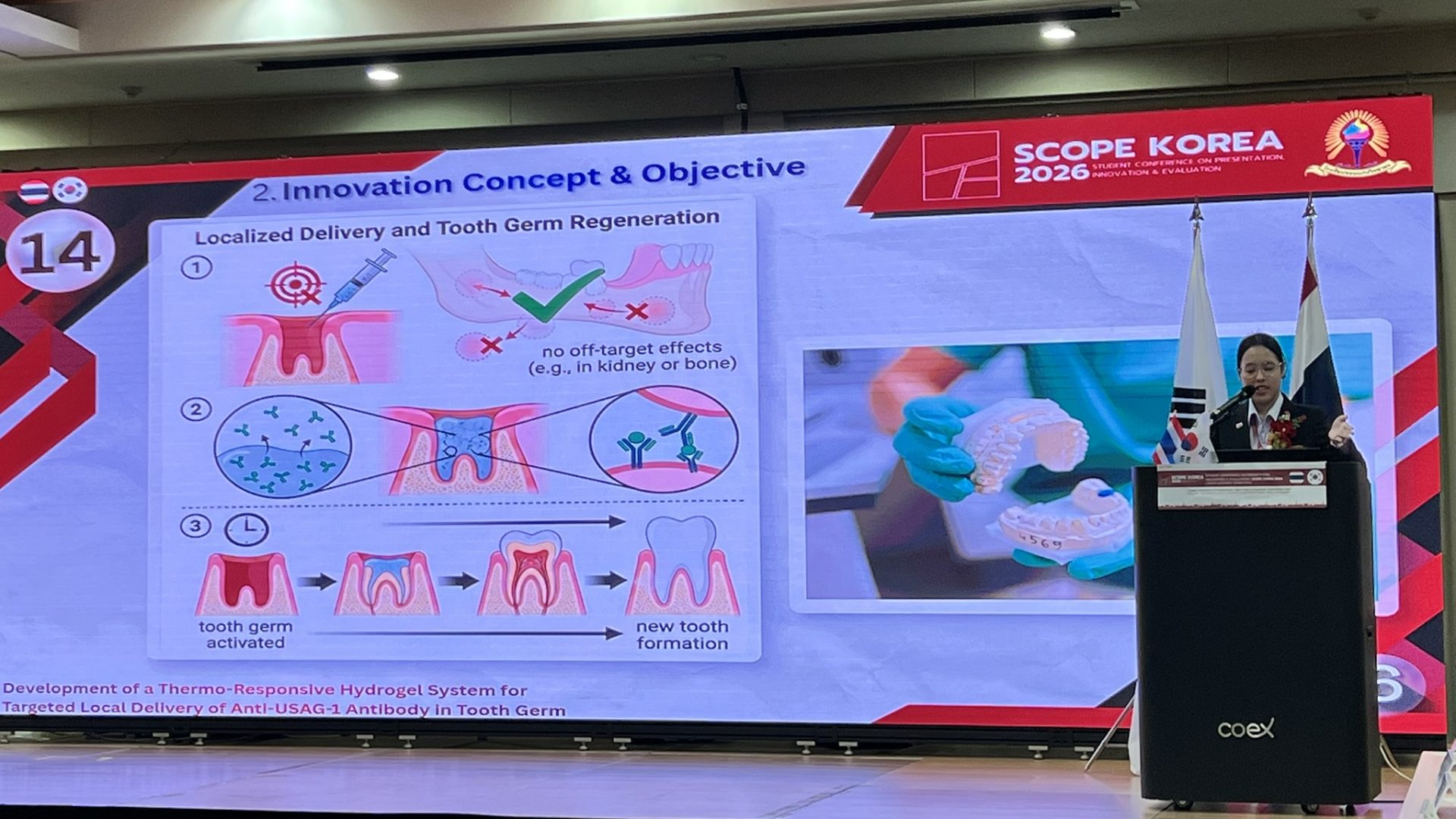
Development of a Thermo-Responsive Hydrogel for Localized Delivery of Anti-USAG-1 Antibody in Tooth Germ Regeneration
Natural limitation: Human permanent teeth cannot regrow because an inhibitory molecule (USAG-1 protein) acts as a brake.
Limitations of systemic injection: Administering Anti-USAG-1 via the bloodstream causes severe side effects, including toxicity to other organs (bones and kidneys) and the risk of misaligned teeth due to a lack of precision
Synthesize an oral-suited thermo-responsive hydrogel.
Analyze controlled Anti-USAG-1 antibody release kinetics.
Assess system safety and tooth germ regeneration efficacy
The project successfully solved the major issue of treatment with Anti-USAG-1 by using hydrogel as a spatial control agent.
It transitions the era of dentistry from “using replacement devices” to “Regenerative Dentistry,” allowing humans to safely regrow natural teeth for the first time
Development of an Autonomous Drone-Based Organ Preservation System for Transplant Transportation
Organ transplantation is a life-saving treatment, but successful outcomes depend on rapid and safe organ transportation.
Interviews with transportation personnel identified traffic congestion and adverse weather as major causes of delays.
This project explores a drone-compatible organ preservation system inspired by normothermic machine perfusion to improve transportation efficiency while maintaining organ viability
To reduce transportation-related delays during organ delivery.
To design a lightweight drone-compatible organ preservation module.
To maintain organ viability through continuous monitoring and preservation.
To improve the efficiency and reliability of transplant logistics
This project proposes an autonomous drone-based organ preservation system to improve organ transportation efficiency.
By reducing transport delays while maintaining organ viability, it aims to reduce transportation-related ischemic injury and improve transplant outcomes.
This concept demonstrates the potential of biomedical engineering to address real-world challenges in transplant logistics
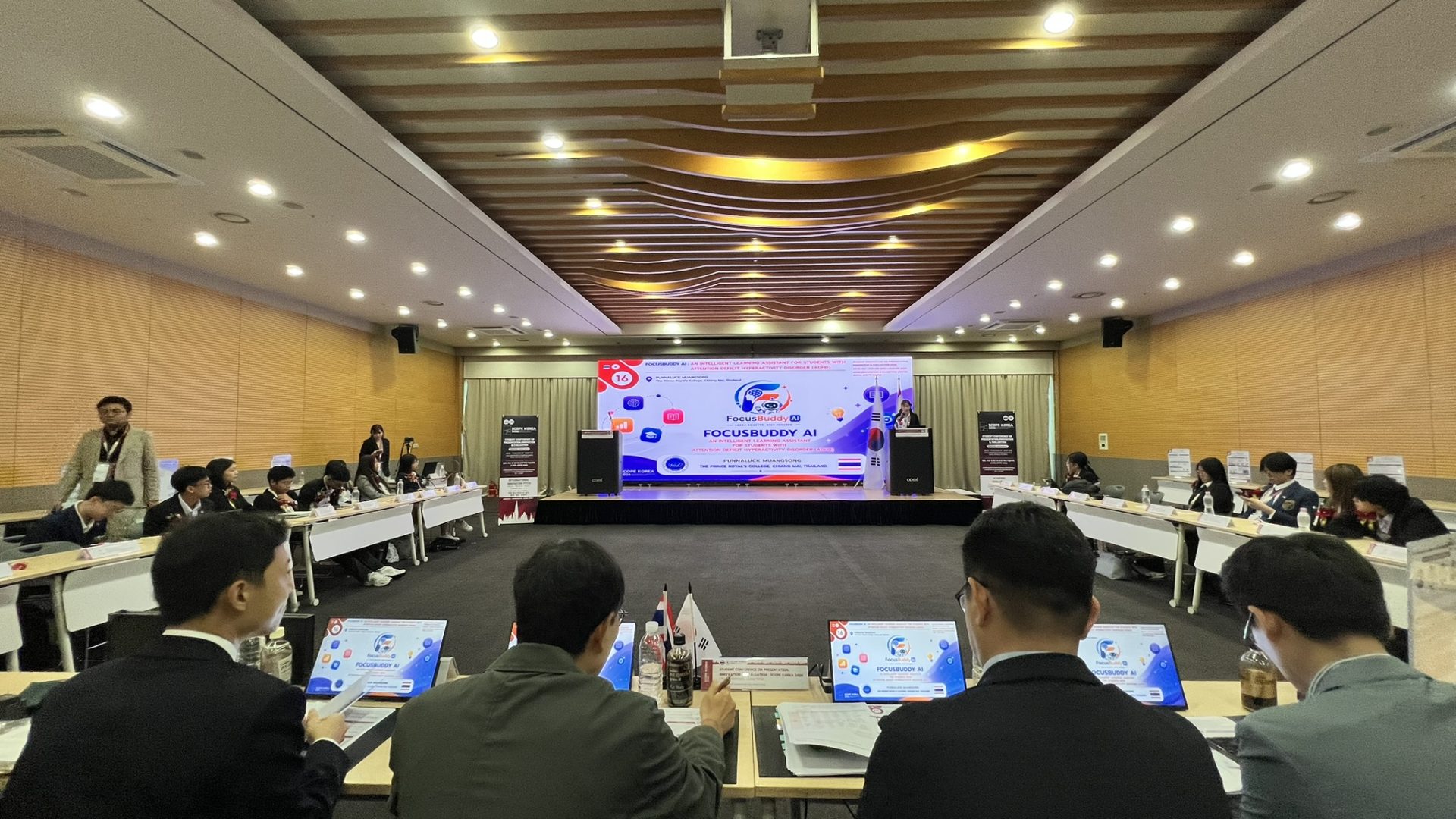
FocusBuddy AI : An Intelligent Learning Assistant for Students with Attention Deficit Hyperactivity Disorder (ADHD)
Students with ADHD often struggle to focus, lack continuity in learning, and lose motivation, leading to lower-than-expected academic achievements.
Studies indicate that children with ADHD learn more effectively when engaged in concise, interactive learning activities with consistent positive reinforcement.
FocusBuddy AI was developed as an intelligent application integrating AI with gamification and adaptive learning concepts to help students learn effectively in a way tailored to their individual abilities
To develop the FocusBuddy AI application to support learning for students with ADHD.
To help improve concentration and focus during lessons, and foster learning motivation through a gamification and reward system.
To evaluate user satisfaction with the application
Every child has potential, but not everyone learns in the same way.
FocusBuddy AI is more than just a learning assistant; it is a “companion that truly understands the learner”.
It ensures that every child has the opportunity to learn to their full potential
A multifunctional self-healing hydrogel for diabetic foot ulcer healing
The total number of adults with diabetes is projected to rise up to 853 million by the year 2045 (approximately 1 in 8 adults).
18–34% of these people will develop a Diabetic Foot Ulcer (DFU).
Prolonged high blood sugar damages nerves (Diabetic Neuropathy) and vessels (Ischemia), reducing sensation, impairing circulation, and often leading to chronic wounds.
If left untreated, these ulcers can become infected, making lower-limb amputation necessary to prevent further complications.
This project proposes a multifunctional self-healing hydrogel incorporating Xanthones from Garcinia mangostana and Andrographolide from Andrographraphics paniculata, combining their properties with self-healing polymers to enhance diabetic foot ulcer healing
To develop a multifunctional self-healing hydrogel with enhanced mechanical strength, flexibility, and durability for diabetic foot ulcer treatment.
To optimise the hydrogel’s wound healing-performance by incorporating Garcinia mangostana Xanthones and Andrographis paniculata Andrographolide extracts for their antimicrobial, anti-inflammatory, and antioxidant properties.
To promote environmental sustainability utilising renewable plant resources native to Thailand.
To improve quality of life of diabetic foot ulcer patients by reducing infection and amputation risk
The self-healing hydrogel combines Xanthones from Garcinia mangostana and Andrographolide from Andrographis paniculata to provide antioxidant and anti-inflammatory properties.
The hydrogel’s self-healing structure enables rapid repair while maintaining its strength and durability.
This approach accelerates diabetic foot ulcer healing, reduces the risk of infection and amputation, and improves patients’ quality of life
Development of a Fiber-Reinforced Alginate Casting Tape to Improve Fracture Care Access for Low-Income Patients
Fiberglass casting has barely changed in decades, and removal requires an oscillating saw, which can potentially cause skin laceration and thermal injury.
Finished resin-and-glass composites are non-biodegradable and rely on mined silica and petrochemical feedstocks.
Sodium alginate offers a sustainable alternative by gelling instantly around calcium ions via the “egg-box” model, and this ionic bond can be reversed using a chelating agent like sodium citrate.
AlgiCast pairs this reversible chemistry with a continuous woven natural fiber to approach fiberglass’s structural role while offering a gentler, renewable, and biodegradable path from production to disposal
To design a fiber-reinforced, calcium-gelled alginate casting tape.
To match fiberglass’s continuous-fiber reinforcement strategy using renewable, low-cost woven bast fibers.
To enable a gentler, saw-free removal through a sodium citrate soak that reverses the gel.
To evaluate feasibility against fiberglass through a literature-based comparison ahead of full-scale prototyping
The product is an orthopedic cast reinforced with woven hemp fiber, utilizing a calcium-crosslinked sodium alginate matrix to create a cost-effective, environmentally friendly alternative that stabilizes fractures.
If successful, it could reduce the use of petrochemical-based resins and fiberglass with silica by replacing them with renewable, lower-cost natural materials like hemp and sodium alginate.
It aims to reduce material costs, reduce medical waste, and improve the development of lightweight and biodegradable orthopedic casts for a more sustainable health care system
Antioxidant activity of fruit peel watste using the dpph assay with a spectrophotometer and homebuilt photometer
Fruit peels are rich in natural antioxidants, particularly polyphenols and flavonoids, which neutralize free radicals.
In this experiment, the antioxidant activity of lime, orange, and passion fruit peel extracts was measured using the DPPH assay.
Antioxidants reduce the purple DPPH radical, decreasing its absorbance at approximately 517 nm, and results from a spectrophotometer and a homebuilt photometer were compared at 30- and 60-minute incubation times
To study the simple extraction of antioxidants from fruits using an easy and practical method.
To measure the antioxidant activity of three different fruits using the DPPH assay with both a spectrophotometer and a homebuilt photometer.
To compare the antioxidant activity of the three fruits by analyzing the quantitative data to determine which fruit has the highest antioxidant potential.
To compare the antioxidant activity of fruit extracts after storage in the dark for 30 and 60 minutes using the DPPH assay to evaluate the stability of antioxidants over time
The results showed that antioxidants were successfully extracted from lime, orange, and passion fruit peels, and their antioxidant activity was measured using the DPPH assay with both a spectrophotometer and a homebuilt photometer.
Passion fruit peel showed the highest antioxidant activity, followed by orange and lime peels, and a longer incubation time (60 minutes) resulted in slightly higher antioxidant activity than 30 minutes.
The consistent results from both instruments demonstrate that the homebuilt photometer is a reliable and cost-effective alternative
Reclaiming Health INTEGRITY: Integrating Traditional Medicine into a Decentralized Future of Healthcare
The COVID-19 pandemic exposed fundamental fractures within the global medical-industrial complex, including structural reliance on centralized corporate entities, top-down clinical tunnel vision, and severe diagnostic delays.
Modern medicine faces an escalating crisis in treating complex, multi-systemic chronic conditions using a restrictive “one-disease, one treatment, one drug” approach.
This limitation has driven a critical paradigm shift towards traditional, complementary, and integrative medicine (TCIM)
Deconstruct the current reductionist, corporate-dominated healthcare model by validating holistic, multi-component botanical interventions.
Establish a scientifically rigorous framework for integrating traditional medicine into modern clinical practice.
Empower individual health by shifting the focus from centralized emergency containment to decentralized, preventative wellness.
Improve healthcare accessibility by considering naturally available interventions which could reduce reliance on costly pharmaceuticals and complex hospital-only treatments, while reducing hospital administration costs and administrative loads
The corporate-state pharmaceutical paradigm demonstrated during the pandemic proved that hyper-centralized health systems are structurally incentivized to prioritize systemic compliance and corporate risk-reduction over individualized patient care.
Developing distinct avenues for traditional and herbal medicine is a clinical imperative for the future of global well-being.
By validating multi-target botanical therapies through modern systems biology, this shift transitions medicine away from passive, product-dependent management and restores a decentralized, preventative practice rooted in personal autonomy, evidence-based science, and absolute health integrity
NeuroDetect: An AI-Assisted Multi-Biomarker Blood Test for the Early Detection of Alzheimer's Disease
Alzheimer’s disease (AD) affects over 55 million people worldwide, with brain changes beginning 10–20 years before symptoms appear.
Current methods like PET imaging and CSF analysis are expensive and invasive, while recent advances have identified specific blood markers (p-tau217, NfL, GFAP, Aβ42/40 ratio).
NeuroDetect is an AI-assisted, multi-biomarker blood screening platform that combines blood markers with clinical data to evaluate an individual’s risk
Propose an AI-assisted multi-biomarker platform for early AD detection.
Evaluate the effectiveness of blood biomarkers (p-tau217, NfL, GFAP, Aβ42/40) and AI integration.
Compare blood-based screening with conventional methods (PET/CSF).
Establish a minimally invasive, accessible, and cost-effective screening approach
NeuroDetect provides a minimally invasive and accessible blood test for early Alzheimer’s detection.
It supports earlier diagnosis, improves patient outcomes, and reduces reliance on expensive, invasive methods
Biodegradable Microneedle Platform for Sustained Localized Delivery of hUC-MSC-Derived Exosomes to Promote Myocardial Regeneration
Myocardial infarction remains a leading cause of heart failure and mortality, while conventional treatments face limitations in achieving targeted, sustained drug delivery to damaged heart tissue.
Human umbilical cord mesenchymal stem cell-derived exosomes (hUC-MSC-derived exosomes) offer significant potential for myocardial repair by enhancing angiogenesis, reducing inflammation, inhibiting apoptosis, and limiting fibrosis.
This project proposes a biodegradable GelMA/hyaluronic acid hydrogel integrated with dissolving microneedles and a PCL backing to provide sustained, localized exosome delivery to the infarcted myocardium
Propose a biodegradable GelMA/HA hydrogel integrated with UC-MSC-derived exosomes for sustained localized therapeutic delivery.
Develop a conceptual delivery platform that enhances exosome retention at the infarcted myocardium compared with conventional intramyocardial injection.
Evaluate the potential of the proposed platform to support myocardial repair by promoting angiogenesis while reducing inflammation, apoptosis, and fibrosis through a literature-based analysis
The project proposes a detachable biodegradable microneedle array for the sustained localized delivery of hUC-MSC-derived exosomes to promote myocardial regeneration following myocardial infarction.
By integrating GelMA dissolving microneedles, PCL backing, and a snake jaw-inspired minimally invasive implantation approach, the platform aims to improve targeted therapeutic delivery while supporting angiogenesis and reducing inflammation, apoptosis, and fibrosis
SCOPE KOREA 2026
29 JUL – 2 AUG 2026
GEN 03 · AUGUST 2026
THAILAND × SOUTH KOREA
From presentation to recognition
> the next stage could be yours. <
จากการเตรียมผลงาน สู่การนำเสนอในต่างประเทศ และการได้รับการประเมินในเวทีนานาชาติ รุ่นต่อไปอาจเป็นคุณ