A portfolio you can explain: showing capability through one project
Choose evidence that fits your claim, make your contribution visible and explain revisions honestly—with a one-page example and an evidence checklist.
The examples help organize learning evidence. Adapt them to the requirements of the course and application year.
Read & put into practice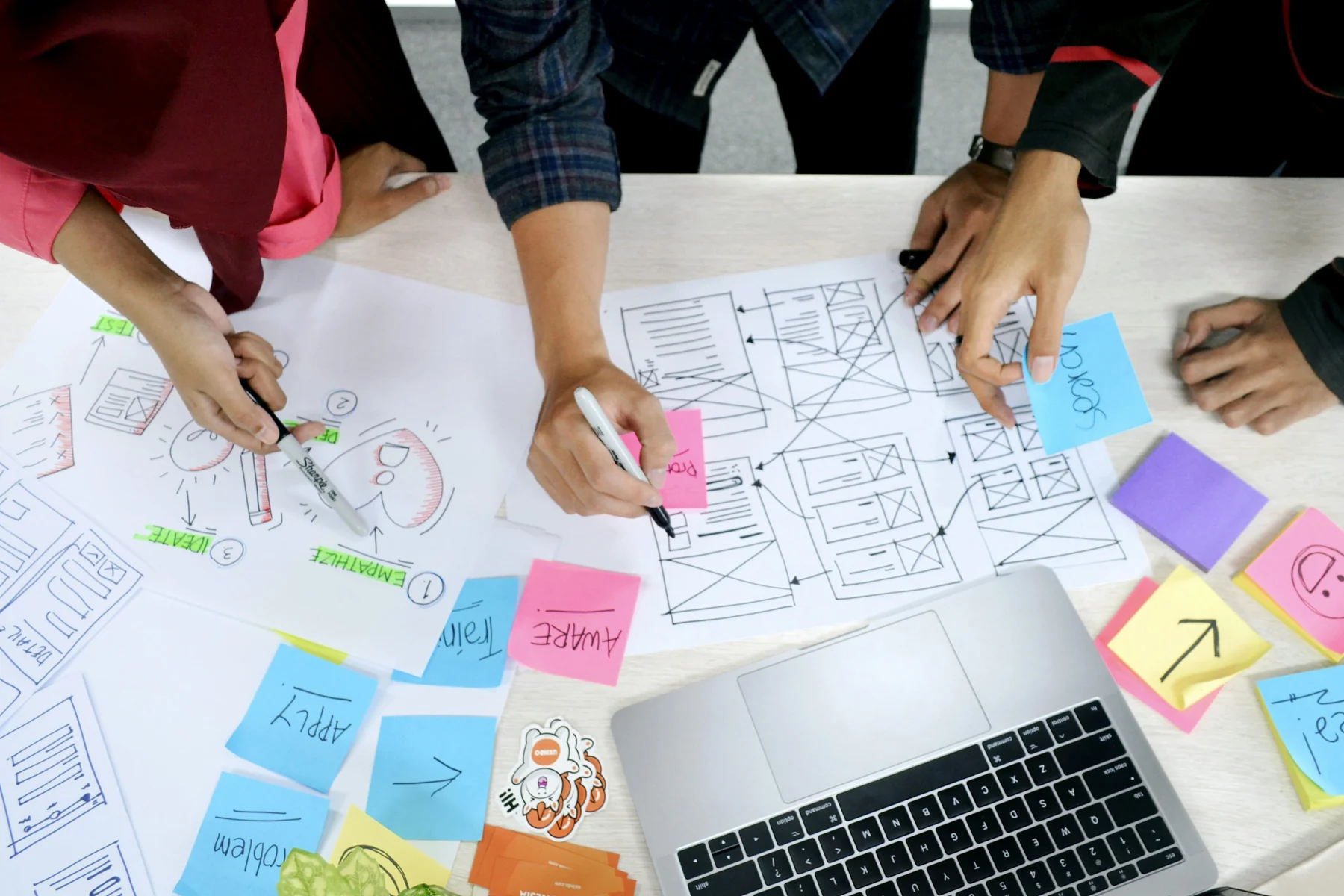
When choosing work for a portfolio, ask: “How will a reader see what I can actually do?” Choose a project you can explain in depth. Look for evidence of the question you asked, the decisions you made and the revisions that followed a problem. Then select images and arrange the page.
This article offers a way to make evidence easy to inspect, informed by institutional guidance and a framework for describing contributions. The page structure and tools are our editorial proposals. Begin with the requirements of your intended course and application year, then adapt what is relevant.
Key ideas to take away
- Match each important claim with evidence a reader can inspect.
- Describe your own contribution and the help you received.
- Show what revisions taught you and the limits of the result.
What evidence do you already have?
Choose a starting point and see what would help a reader understand the work.
Establish the activity, then show your work
- A question to explore
- Does it confirm participation, an award or something else?
- Put it into practice
- Record the event, edition, date and your responsibility; add one relevant work sample.
- Evidence to keep
- Confirmation document + work sample + a verifiable role description.
Make your reasoning traceable
MIT’s Maker Portfolio guidance emphasizes documentation of the build process and clear explanations. Its Research Supplement includes reflection and information from a research mentor. This is a useful example of what one institution looks for beyond a finished output; the requirements belong specifically to MIT. [1]
For your own work, ask a peer to read one page and answer three questions: what problem does the project address, what did you do, and which evidence supports that account? If the answers are unclear, add the missing information before adding decoration.
What evidence does each claim need?
| Claim | Possible evidence | What still needs explaining |
|---|---|---|
| I can evaluate sources. | A source-comparison table with inclusion and exclusion reasons. | Your relevance criteria and the limits of the sources. |
| I can design a test. | A test plan, variables, recording method and resulting observations. | What was and was not controlled. |
| I can revise using evidence. | Two versions and a note linking evidence to the revision. | The purpose of the change and any new test result. |
| I contribute to a team. | A task record, meeting note or revision history showing responsibility. | How your contribution connects with others’ work. |
Make a team project clear through individual roles
NISO’s CRediT taxonomy distinguishes 14 research contributions, including conceptualization, methodology, data curation, analysis and writing. A student project can borrow the idea of explicit roles without using every category or treating it as an admissions rubric. [2]
Fictional example: “We defined the problem together. I designed the recording table and analyzed the results; a teammate assembled the prototype, and our teacher reviewed the test method.” This shows collaboration and individual responsibility. Invite teammates to check the account before publication.
If a template, AI tool or expert helped, describe where it was used and what you checked or developed afterward. The reader should be able to trace which decisions and outputs were your responsibility.
A one-page project account
The following content model uses a fictional water-level alert prototype. It is not a real student’s work, and one page is not a universal requirement. The purpose is to practice selecting essentials while leaving a clear route to supporting records.
| Section | Example | Supporting record |
|---|---|---|
| Question | How consistently does the model signal at a specified level? | System diagram and test criteria |
| Contribution | I designed the test record and summarized results; my teammate built the model. | Team-reviewed contribution record |
| Evidence | In six fictional test runs, the signal fluctuated near the threshold twice. | Run-level data and conditions |
| Revision | Revised the proposed signal-checking method; a new test has not yet been run. | Original and revised plans, with reasons |
| Learning | Test count and conditions limit what I can claim about performance. | Limitations and next test plan |
Show how your thinking changed
EEF recommends teaching planning, monitoring and evaluation within subject learning. We adapt that principle into project-reflection prompts. This does not establish that our portfolio format improves admissions chances. [3]
Replace a broad line such as “I gained problem-solving skills” with four parts: what I first thought, what new evidence appeared, what I changed and what I still need to check. In the fictional example, a student might learn that one successful demonstration cannot establish consistency.
If your memory is incomplete, distinguish contemporaneous records from a reflection written later. Keep dates and file versions so that a later insight is not accidentally presented as your original plan.
Select evidence that is useful and accessible
The SCOPE KOREA archive offers project records, photographs and videos that can establish context. A stage photograph alone does not establish a person’s development role or learning gain. Pair public records with your own process evidence and state what each item confirms. [5]
Before submission, ask someone to open files and links using their own account. Check captions, file sizes and meaningful names. Remove unnecessary personal information about others and use materials you are entitled to share. Follow the announced format if external links are not accepted.
For Thai applications, use myTCAS to begin a course search and read the university’s current announcement directly. [4] Make a personal table of requirements, matching evidence and remaining gaps. This helps adapt existing work to the actual brief and available space.
Questions that can hold you back
01Can I start without a major award?
You can organize learning evidence around work you can explain clearly. Whether it meets an application depends on that course’s specific requirements, including any required awards. These tools help describe work; they do not replace eligibility rules.
02How should I present unfinished work?
State its status on the date of writing. Separate completed and checked work from planned steps. Evidence of identifying a problem and deciding how to address it can still explain your reasoning, subject to the destination’s requirements.
03Can one activity illustrate several skills?
Yes, when each skill has relevant evidence: an analysis table for data reasoning, for example, and a contribution record for teamwork. Using the same photo to support every claim makes the account harder to inspect.
From reading to your next small step
Check one project before designing the page
Use this list to check the clarity of your account against records you actually have.
Choose evidence that makes your work understandable, then let the design help a reader follow it.
Selections stay on this page, are not submitted and reset when the page is reopened.One project can tell a substantial story when you explain its question, decisions, evidence and learning in your own words.
How this article was developed
This article synthesizes MIT guidance, NISO’s CRediT framework, EEF guidance and myTCAS information checked on 2 October 2026. TechEd records illustrate evidence types. We did not survey admissions reviewers or compare acceptance rates for different portfolio formats.
The water-level project, the six-run and two-run figures, sample wording, tables and tools are original fictional teaching examples. They do not describe a real student or application outcome, and the tools have not been validated with learners.
TECH EDUCATION operates the programs discussed and publishes this article, creating an interest in the subject. This is a source-based editorial analysis, not an independent evaluation, and has not undergone external peer review.
Explore the original sources
- 01MIT Admissions · Creative portfolios (n.d.)
Research Supplement and Maker Portfolio sections · One institution’s approach, not a rule for Thai admissions
- 02NISO · Contributor Role Taxonomy (CRediT) (2022)
Fourteen contributor roles · Used as a model for describing one’s own work
- 03Education Endowment Foundation · Metacognition and Self-Regulated Learning (2025)
Second edition · Planning, monitoring and evaluating learning within a subject
- 04Council of University Presidents of Thailand · myTCAS (2026)
Official course and admissions gateway, checked 2 October 2026; current announcements remain authoritative
- 05TECH EDUCATION · SCOPE KOREA GEN 03 archive (2026)
Examples of public records; these do not establish individual contributions or admission outcomes
Sources checked October 2, 2026 · Please contact the team with a source if you identify a correction. Contact the team
Explore the related programs
Review the aims, activities and edition-specific conditions before choosing your next experience.
SCOPE KOREASCOPE KOREA | Student Conference on Presentation, Innovation & Evaluation K-XCELK-XCEL | Korea eXcellence through Competency, Experience & Learning IMEDDATMedical Science Aptitude Development and Testing