
After the conference: how does learning continue?
A practical 3-, 6- and 12-month follow-up framework for continued work, educational choices and fair interpretation of the evidence.
Proposed follow-up framework · This article contains no participant-level TechEd outcomes at 3, 6 or 12 months.
Read & put into practice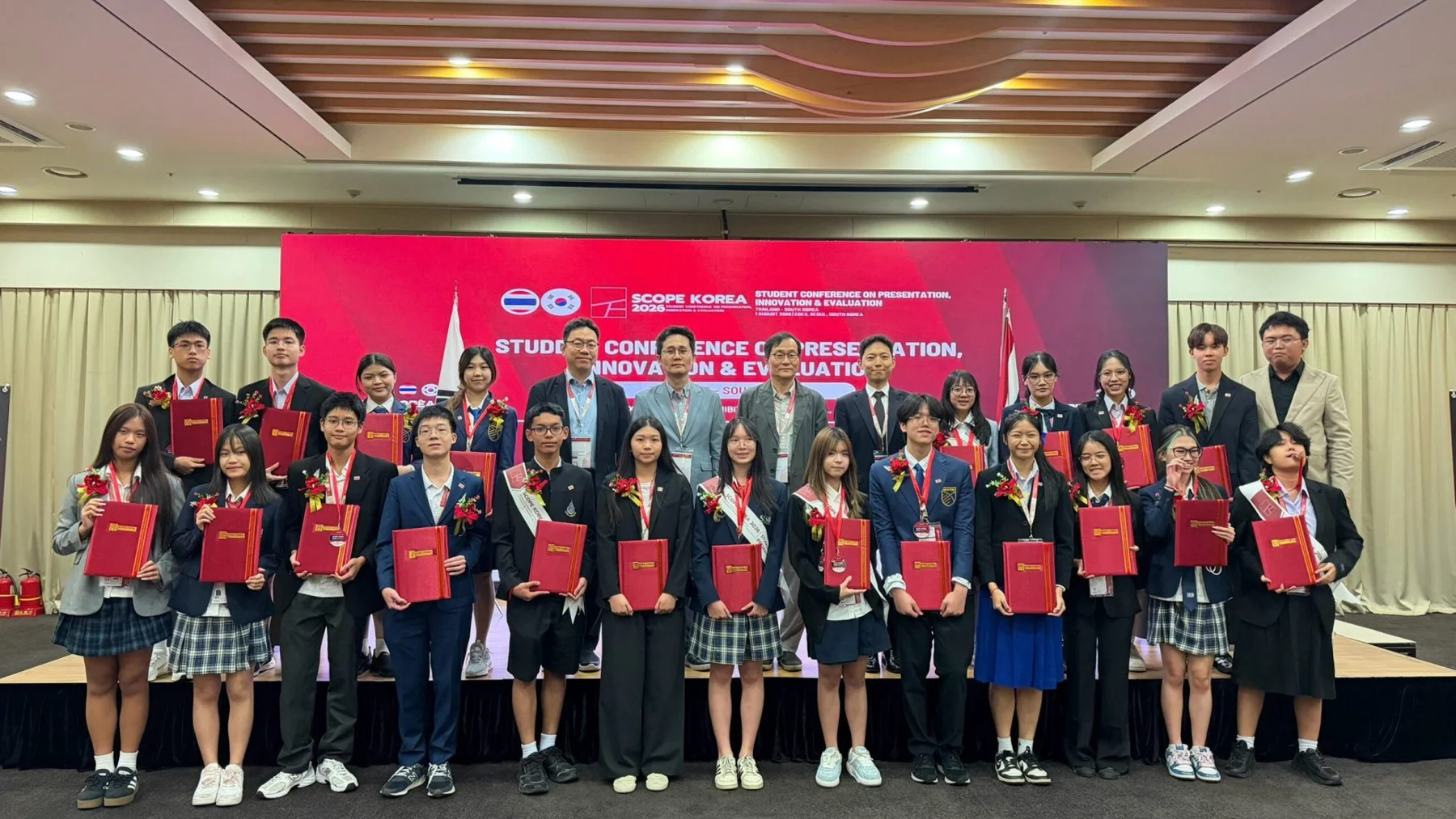
After the poster is packed away, what stays with a learner? It may be a question carried into a new project, a clearer way to explain evidence, or the discovery of another interest. A photograph from the certificate ceremony cannot show all of that. Some learning becomes visible only with time.
This article proposes a 3-, 6- and 12-month follow-up framework: questions, evidence and interpretation that teachers, families and organizers can adapt. It is not a report of TechEd participant outcomes; the reviewed dataset contains no linked individual records across those intervals.
Key ideas to take away
- Follow what students do and can explain, alongside their own reflections.
- Distinguish event-day outputs, later application and longer-term outcomes.
- Always report the denominator and missing follow-up records.
Choose a milestone and plan the conversation
An adaptable planning example. No questionnaires are sent and no participant tracking is activated here.
Revisit the first intended step
- A question to explore
- What have you tried since the event, and what got in the way?
- Put it into practice
- Compare one piece of work with the goal set at the end of the event; if nothing was attempted, discuss the support needed.
- Evidence to keep
- A dated revision or short record with reasons.
Why look beyond the last day?
An OECD analysis of longitudinal data from eight countries links teenage career exploration, experience and thinking with later employment outcomes. [1] It supports interest in the continuing journey; it does not establish that a short TechEd event or visit produces the same outcomes.
For secondary students, nearer-term questions may be more useful: did feedback lead to a revision, did a way of reading evidence transfer to another subject, and what became clearer about personal interests? A reasoned change of direction can itself be learning.
Three layers of evidence before telling an outcome story
What happened at the event
Attendance, posters, videos and presentations document activity and outputs. The SCOPE directory supports this layer, but does not establish change after returning. [4]
What was used afterward
A revised piece of work, an explanation of a new problem or application in a school project needs a date and evidence of the action.
The path that develops over time
Educational choices, team responsibilities and sustained work should be understood alongside opportunities, support and other activities.
Start before the event to understand later change
For a new follow-up process, retain an initial question, one piece of work and the student’s reason for joining before the event. At the end, retain the final version and intended next step. TechEd’s earlier evidence framework identifies questions, methods, reasoning, communication and revision as useful things to examine. [5]
If an earlier cohort has no baseline work, record that it is unavailable. Retrospective memories can enrich an account, but should not become invented pre-event scores. EEF’s planning, monitoring and evaluation approach informs our follow-up questions. [3] The 3-, 6- and 12-month intervals are our proposed schedule.
Different questions at 3, 6 and 12 months
| When | Main question | Suitable evidence to collect |
|---|---|---|
| 3 months | Was the planned next step attempted, and what helped or prevented it? | A revised work or a dated explanation of why it was not attempted |
| 6 months | How was the approach used on a different problem? | A new task and an explanation of what was retained or adapted |
| 12 months | How have interests and educational choices developed or changed? | A sequence of later work and reasons for choices, including other relevant experiences |
Read follow-up statistics fairly
Fictional example: 40 participants are due for follow-up; 24 respond and 15 of those submit evidence of continued work. The response rate is 24/40 = 60%. Evidence of continued work is available for 15/24 = 62.5% of respondents. These are exercise figures, not TechEd statistics.
We cannot say that 62.5% of the whole cohort continued: 16 people have no follow-up data. Documented continuation covers 15/40 = 37.5% of all those due, which does not mean everyone else stopped. Missing follow-up may introduce bias, as WWC explains. [2] Report the numerator, denominator and remaining uncertainty.
Observe change without overstating its cause
Improvement after an event may also involve mentors, new classes, practice time or other activities. Describing what happened afterward differs from demonstrating program causation. A causal question needs an appropriate evaluation design, baseline information and a credible comparison.
A useful report includes continued work, obstacles and changes of plan. A student who changes topics or has not chosen a university field should not automatically be described as unsuccessful. Reasons and evidence tell us more than a success/failure label.
Make follow-up useful and manageable
We propose a short, stable core of questions, with room to say when a question does not fit. Start with one existing piece of work or explanation. Use participant codes in analysis and minimize personal information. Learning follow-up should not pressure students into positive testimonials.
Before actual collection, the responsible team should define the purpose, access, retention and age-appropriate consent arrangements. For research, review the applicable ethics process before starting. Follow-up participation, named publication and promotional image use should be explained as separate choices.
From reading to your next small step
Ready to collect meaningful evidence
Review the plan before actual data collection. These selections do not record or submit personal data.
Good follow-up helps learners see a next step and helps organizers understand where support can improve.
Selections stay on this page, are not submitted and reset when the page is reopened.When follow-up starts with curiosity about learners, it reveals more than one destination: continued work, support needs and reasoned new directions. Such evidence can guide more thoughtful and fair program development.
How this article was developed
This synthesis uses the OECD abstract and publication record, WWC’s attrition overview, EEF guidance and TechEd records reviewed on 2 October 2026. It proposes a practical framework, not a systematic review or completed program evaluation.
No linked individual records span baseline, completion and 3/6/12 months. We report no TechEd success rate, university-admission effect or causal impact. The numbers 40, 24 and 15 are fictional. The proposed tools are not validated measures, and this page sends no surveys or automated follow-up.
TECH EDUCATION operates the programs discussed and publishes this article, creating an interest in the subject. This is a source-based editorial analysis, not an independent evaluation, and has not undergone external peer review.
Explore the original sources
- 01Covacevich, C. et al. / OECD · Indicators of teenage career readiness (2021)
Education Working Papers No. 258 · Abstract and record of the eight-country longitudinal analysis reviewed
- 02What Works Clearinghouse / IES · Assessing Attrition Bias (2014)
Overview of attrition and bias · No claim that this framework meets WWC standards
- 03Education Endowment Foundation · Metacognition and Self-Regulated Learning (2025)
Second edition · Planning, monitoring and evaluating learning
- 04TECH EDUCATION · SCOPE KOREA GEN 03 (2026)
Work recorded at the conference · A starting record, not a longitudinal dataset
- 05TECH EDUCATION · จากคะแนนสอบสู่สมรรถนะที่มองเห็นได้ (2026)
Reading project evidence and the limits of program records
Sources checked October 2, 2026 · Please contact the team with a source if you identify a correction. Contact the team
Explore the related programs
Review the aims, activities and edition-specific conditions before choosing your next experience.
SCOPE KOREASCOPE KOREA | Student Conference on Presentation, Innovation & Evaluation K-XCELK-XCEL | Korea eXcellence through Competency, Experience & Learning IMEDDATMedical Science Aptitude Development and Testing