
Beyond the visit: bringing learning home
A practical guide to preparing questions, observing with purpose and creating something after returning—so an overseas experience connects with learning at home.
Read & put into practice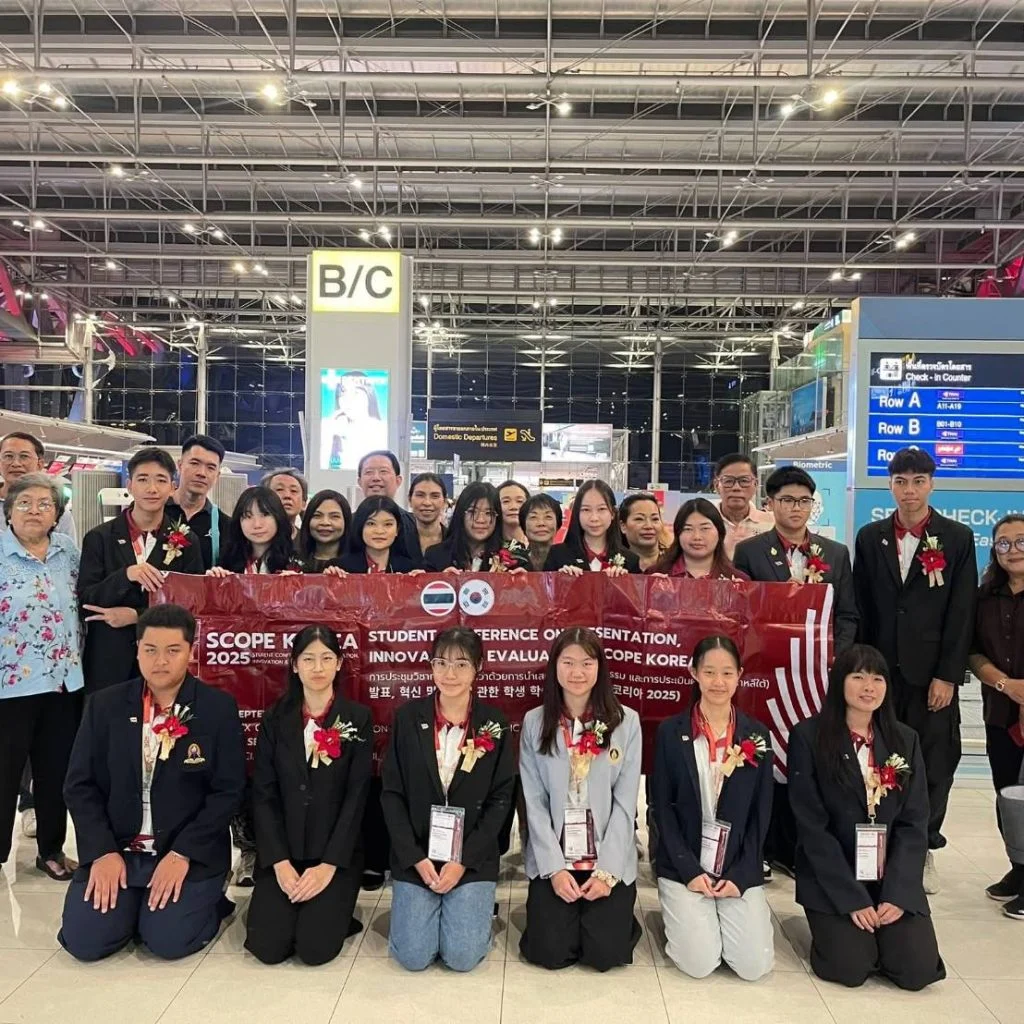
When a family considers an overseas experience, “Where will we go?” deserves a companion question: “What might the student notice, understand or do differently afterward?” An impressive institution can open a door. What travels home may be a sharper question, a way of examining evidence or a more realistic understanding of an unfamiliar field.
This article considers the whole learning journey—before, during and after a visit—for secondary students and the adults supporting them. It combines research on learning beyond the classroom with TechEd program information. The practical suggestions can also be adapted to visits in Thailand or online encounters; distance alone is not the measure of an experience.
Key ideas to take away
- Start with a learning purpose, then examine destinations and activities.
- Separate observation from interpretation, and keep unanswered questions.
- Plan a small follow-up output that makes the learning visible.
What the research suggests
DeWitt and Storksdieck’s review identifies preparation and follow-up as influences on learning from field trips. Its out-of-school settings are not a direct test of TechEd’s short overseas programs. We use it as a design consideration, not a guarantee of outcomes. [1]
The OECD’s 2025 report links teenage career-development activities with clearer plans and later employment outcomes. Those associations do not establish that a single trip causes success or that an overseas visit outperforms a local experience. [2]
For a reader choosing an experience, examine its learning structure: what should be prepared, whom can students question, what feedback is available, and who will help them reflect afterward? Clear answers let a family compare options against the student’s actual needs.
Before departure: turn an interest into a question
Begin with a sentence written by the student: “I want to understand how a laboratory decides whether a result is trustworthy.” Read enough background to recognize key terms and the workflow. A student need not know every answer before leaving, but should be able to distinguish what is already understood from what remains open.
The EEF recommends planning, monitoring and evaluating learning within actual subject work. [3] The following example is our own planning tool; adapt the question to the confirmed itinerary.
| Prepare | A concrete example | A question to carry |
|---|---|---|
| One learning goal | Understand how experimental data quality is checked. | What kind of result prompts a review of the method? |
| Background knowledge | Review control variables and replication. | Which factor is hardest to control here, and why? |
| A follow-up output | A one-page process map showing quality checks. | Have we understood this sequence correctly? |
During the visit: look beneath the surface
Try a three-column record: “What I saw or heard”, “How I interpreted it” and “What I still need to check”. This keeps a single explanation from becoming an overbroad conclusion. Identify whether information came from a display, a document or a speaker, and follow the venue’s rules before photographing or recording.
A useful question does not need complicated vocabulary. Ask about the reason for a decision, its limitations and what might change it. If language is a barrier, prepare a short question, ask a teacher to check its meaning or use a sketch you can explain. Acknowledging uncertainty can begin a valuable conversation.
Notice the process
“What preparation or screening comes before this stage?” Connect the visible activity with the wider workflow.
Ask about the reasoning
“Why choose this method, and what alternatives did you weigh?” Look for the decisions behind the procedure.
Examine the limits
“Under which conditions does this result apply, and what can it not tell us?” Keep conclusions within their evidence.
After returning: give the experience a next step
Photographs and certificates record participation. Explaining what you understood, what changed your thinking and what you would check next makes the content of learning easier to discuss. A large report is not always necessary. Choose a manageable output and someone who can give useful feedback.
Within 48 hours: organize notes
Mark uncertain statements, add sources and complete a paragraph: “I used to think… Now I think… because…” This timing is a flexible editorial suggestion, not a research threshold.
Within one week: explain it to someone
Use a diagram or a permitted photograph to explain one idea to a peer or teacher. Record questions you cannot yet answer clearly and return to the relevant reading.
Within one month: apply an idea in your own setting
Revise a school project’s data-recording method, write an evidence summary or investigate one study pathway. Ask a teacher to check the scope; practical work must remain within approved, supervised activities.
Putting these ideas into practice with SCOPE KOREA and K-XCEL
SCOPE KOREA combines presentation and study visits. A student could pair two goals: explain a project clearly, then use encounters during the visit to reconsider its reasoning. Previous-edition pages offer projects and videos to study, but those records alone do not measure how much participants’ skills improved. [4][6]
K-XCEL develops competencies through experience and learning. For a student interested in biopharmaceuticals, possible preparation goals include reading a process, questioning quality controls and explaining why steps are ordered as they are. Check what the specific edition actually offers as observation, demonstration or hands-on work, and verify confirmed hosts and dates; arrangements can differ. [5]
Questions that help a family choose thoughtfully
01How can we judge value beyond the name of a destination?
Compare the learner’s goal with actual activity time, access to mentors, group size, preparation and follow-up. Ask for a clear list of included and excluded costs and consider local alternatives too. If the budget places excessive strain on the family, a nearby experience with meaningful follow-up may be a better fit.
02What if the student is unsure about a career or not fluent in English?
Begin with one curiosity; an immediate career decision is unnecessary. Ask about working languages, content level, support and tasks students must complete independently. If the demands are far beyond the learner’s background, start with foundational reading or activities. Readiness includes knowing where help is needed.
03Is a change of interest afterward a missed opportunity?
Discovering that real work differs from an imagined career can be useful information. Ask which parts appealed or did not, why, and what the student wants to explore next. The aim is a more informed decision, not forcing an experience to confirm an earlier plan.
From reading to your next small step
Your one-page pre-trip checklist
Check off the items you have prepared to see what remains. This is a personal planning aid, not a readiness score or an admission requirement.
Unchecked items are useful conversation starters with a teacher or organizer before you decide.
Selections stay on this page, are not submitted and reset when the page is reopened.A visit has a return date. Its learning can continue when a student has a question of their own, evidence to revisit and room to try a next step.
How this article was developed
This is an explanatory synthesis of selected sources, not a systematic review. It uses the field-trip paper’s author-repository abstract and record, the OECD executive summary, EEF guidance and program pages checked on 1 October 2026.
Tables, prompts, time windows and the checklist are editorial proposals that have not been evaluated with TechEd participants. We have no pre/post or comparison-group data supporting a program-effect claim. A future evaluation should specify outcomes in advance, assess work consistently and consider students’ starting points.
TECH EDUCATION operates the programs discussed and publishes this article, creating an interest in the subject. This is a source-based editorial analysis, not an independent evaluation, and has not undergone external peer review.
Explore the original sources
- 01DeWitt, J. & Storksdieck, M. · A Short Review of School Field Trips: Key Findings from the Past and Implications for the Future (2008)
Visitor Studies, 11(2), 181–197 · DOI: 10.1080/10645570802355562 · Author-repository abstract and bibliographic record consulted
- 02OECD · The State of Global Teenage Career Preparation (2025)
Executive summary · International teenage career preparation; not an evaluation of TechEd
- 03Education Endowment Foundation · Metacognition and Self-Regulated Learning (2025)
Second edition · Planning, monitoring and evaluating learning within subjects
- 04TECH EDUCATION · SCOPE KOREA (2026)
Current program page · Presentation and study-visit activities
- 05TECH EDUCATION · K-XCEL (2026)
Current program page · Practical learning and edition-specific host arrangements
- 06TECH EDUCATION · SCOPE KOREA GEN 03 (2026)
Published projects, photographs and presentation videos; not pre/post learning measurements
Sources checked October 1, 2026 · Please contact the team with a source if you identify a correction. Contact the team
Explore the related programs
Review the aims, activities and edition-specific conditions before choosing your next experience.
SCOPE KOREASCOPE KOREA | Student Conference on Presentation, Innovation & Evaluation K-XCELK-XCEL | Korea eXcellence through Competency, Experience & Learning